 listicle
Are Protein Balls a Smart Snack Choice?
Last Updated: October 31, 2026
Quick Summary
Protein balls can be a smart snack when you check the label, since they are portable and can offer protein and fiber for staying power. Their value depends on ingredients and portion size, because protein balls vary widely in sugar and calories.
- Compare protein, fiber, added sugar, and calories per serving rather than trusting the front-of-package name.
- Protein balls are calorie-dense, so measure one or two and portion them into a container.
- Check for common allergens such as peanuts, tree nuts, dairy, soy, and gluten.
- Pair protein balls with fruit or water so the snack feels like a snack, not a meal.
Table of Contents
- What Protein Balls Are and Why People Snack on Them
- Benefits of Protein Balls for Snacking
- Protein Balls Ingredients to Check on the Label
- How Much to Eat: Protein Balls Portion Size
- Protein Balls vs Protein Bars: Which Fits Your Day
- High-Protein Snack Ideas Beyond Protein Balls
- Ordering Protein Balls With Vitality Nutrition in Bristol
- Frequently Asked Questions
Protein balls have become a popular grab-and-go snack, and for good reason. They are portable, they require no refrigeration in most cases, and they can be built around ingredients you already recognize. Many people wonder whether these bites are actually a smart choice or just another treat dressed up in health language. The honest answer depends on what goes into them and how much you eat.
What Protein Balls Are and Why People Snack on Them
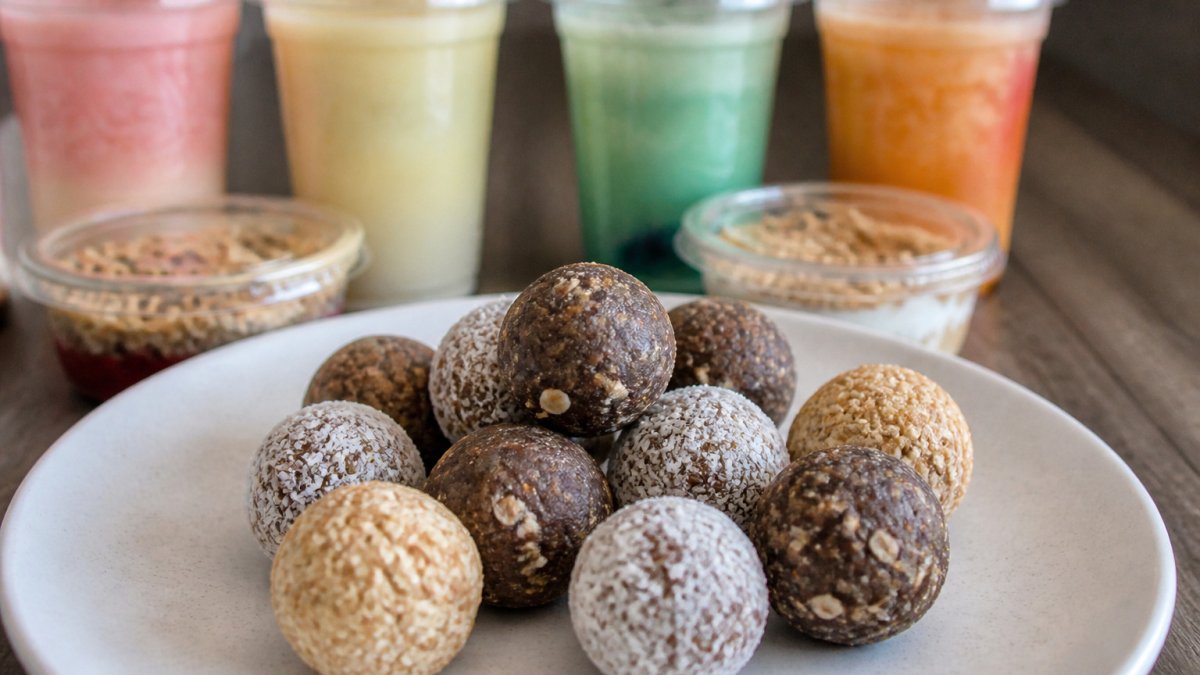
Protein balls are bite-sized snacks, usually rolled by hand, that combine a binder such as nut butter or dates with dry ingredients like oats, seeds, and protein powder. Many people also call them energy balls or protein bites. Their appeal is simple: they fit in a pocket, a desk drawer, or a gym bag, and they do not require utensils or a plate.
People tend to reach for them between meals, before a workout, or during a long stretch at a desk. Because they combine protein, fiber, and fats, they are often chosen when someone wants something more filling than a plain cookie. Recipes vary widely, so two products with the same name can differ a great deal in calories and sugar.
Benefits of Protein Balls for Snacking
The main advantages are practical. First, they are convenient. You can carry them anywhere and eat one without preparation. Second, they can offer more staying power than many packaged snacks, because protein and fiber digest more slowly than refined carbohydrates. Third, they are easy to portion. A single ball is a natural serving size, which helps when you are trying to avoid overeating.

Protein Balls Ingredients to Check on the Label
Not all protein balls are equal, so reading the label is worth the effort. A useful approach is to compare four numbers per serving, protein, fiber, added sugar, and calories, rather than trusting the front-of-package name. The table below gives a practical starting framework; it is general guidance, not a medical prescription, and your needs may differ.
What to check | What to look for | Why it matters |
|---|---|---|
Protein per serving | A meaningful amount relative to the snack's calories | Protein supports satiety and normal muscle recovery; a ball with very little protein is closer to a treat |
Fiber per serving | Present from oats, seeds, or dried fruit | Fiber slows digestion and contributes to staying full |
Added sugar | Lower is generally better for a between-meal snack | Honey, syrup, chocolate chips, and sweetened dried fruit can push a snack toward dessert territory |
Calories per serving | Compare against the ball's size | Small balls can be calorie-dense; serving size is the anchor for everything else |
Ingredient list | Recognizable whole foods near the top | Ingredients are listed by weight, so the first few tell you what the ball is mostly made of |
Also note the protein source, whey, plant protein, or another option, especially if you have a dairy or soy sensitivity. Watch for common allergens: peanuts, tree nuts, dairy, soy, and gluten-containing grains appear in many recipes. If you follow a specific eating plan, compare the nutrition panel side by side rather than relying on the marketing name alone.
Allergen-Aware and Dietary-Restriction Options
If you avoid certain ingredients, the label is your main tool. For nut-free needs, look for balls built on seeds such as sunflower or pumpkin seed butter instead of peanut or tree-nut butter, and confirm the facility statement if cross-contact matters to you. For dairy-free and vegan choices, check that the protein source is plant-based and that no whey, milk powder, or honey is listed. For gluten-free needs, look for oats labeled gluten-free and confirm the package statement, since oats are often processed alongside wheat. When in doubt, ask before you buy, a quick question about ingredients is faster than a reaction later.
Homemade Versus Packaged
Homemade balls give you full control over sugar, protein, and allergens, but they also put the portioning and food-safety burden on you. Packaged balls come with their own nutrition panels, which make comparison straightforward. Neither is automatically healthier; the better choice depends on which trade-off fits your routine.
How Much to Eat: Protein Balls Portion Size
A common approach is to treat one or two protein balls as a single snack, though the right amount depends on the size of each ball and your overall daily needs. Larger homemade versions can contain as many calories as a small meal, so measuring the first few is a good habit. Checking the serving size on the package is the quickest way to know what you are eating.
The Calorie-Density Trade-Off
Protein balls are compact, so it is easy to eat more than you intended. A ball the size of a golf ball can carry a surprising number of calories from nut butter, oats, and sweeteners. That is not a reason to avoid them, it is a reason to portion deliberately. Two practical habits help: portion balls into a small container rather than eating from the bag, and pair one or two balls with a lower-calorie companion such as fruit or a glass of water so the snack feels like a snack, not a meal.
Who May Benefit, and When to Eat Them
Protein balls fit different routines differently. At a desk or on a commute, one or two balls can bridge a long gap between meals. While traveling, they are a tidy option that does not need utensils. The common thread is using them as a bridge, not as a replacement for balanced meals.
Potential Drawbacks to Weigh
Balance the benefits against a few real limitations. Calorie density means portion control matters. Added sugars can turn a health-labeled snack into a dessert. Allergens such as peanuts, tree nuts, dairy, soy, and gluten are common. And because recipes vary widely, two balls with the same name can differ substantially in protein, sugar, and calories. None of these makes protein balls a bad choice, they simply mean the label and the portion deserve as much attention as the flavor.
Food Safety and Storage
Homemade balls may contain perishable ingredients such as nut butter, fresh dates, or dairy, so check your recipe for storage guidance. Packaged balls carry their own storage instructions, follow the package for shelf life and refrigeration needs, and discard anything that smells or looks off.
Protein Balls vs Protein Bars: Which Fits Your Day
Protein balls and protein bars serve similar purposes, but they differ in texture, packaging, and often in ingredients. Protein balls are typically softer and may differ from bars in texture and ingredients. Bars often list their protein and calorie content prominently, which can make comparison straightforward.
Which one fits better depends on your routine. If you want a tidy, predictable snack for a long commute, a bar may suit you. If you prefer something you can share, customize, or eat in two or three bites, protein balls may feel more satisfying. Either way, compare labels side by side rather than assuming one is automatically healthier.
High-Protein Snack Ideas Beyond Protein Balls
Variety keeps snacking interesting and nutritionally balanced. Greek yogurt with berries, hard-boiled eggs, cottage cheese with cucumber, roasted chickpeas, and turkey roll-ups are all easy high-protein options. For more alternatives, read our local guide to healthy protein shakes in Bristol. A protein shake is another option, and many people find shakes convenient after a workout or on a busy morning.
Mixing these choices with protein balls can help you meet your protein goals without relying on one type of snack. For more ideas to beat an afternoon slump, browse these best healthy snacks for afternoon energy. Think about what you will actually eat at the time you need it, because the best snack is the one you will reach for.
Ordering Protein Balls With Vitality Nutrition in Bristol
If you are in the Bristol area and want protein balls, protein shakes, or loaded teas, Vitality Nutrition LLC offers several ways to order. If you are a commuter looking for portable options, see our convenient healthy snacks for Bristol commuters. Free curbside pickup is available, and TeaDash delivery serves eligible addresses up to 10 miles from the shop. Independent drivers fulfill delivery orders through Square; enter your address at checkout to confirm availability and see the delivery fee. Any delivery tip goes directly to your driver. If you plan to collect your order, see the step-by-step pickup process. You can compare local and delivery options in Bristol before placing your order. Pricing and current menu items can change, so please check our website for the latest details before you order.
For office groups, you can plan a workplace tea run through our online ordering options. If you have questions about ingredients or portion sizes for a particular product, reach out before you buy so you can make the choice that suits your needs.
Frequently Asked Questions
How many protein balls should you eat a day?
Most people do well treating protein balls as one snack rather than a meal replacement. Start with a single serving and check the label for its size and calorie count, since sizes differ between brands and recipes. Pair it with other foods across the day so your total intake fits your own goals. If you are managing a medical condition or have specific dietary needs, check with a registered dietitian or your doctor before making it a daily habit.
What should you look for in a protein ball?
Look at the protein, fiber and added sugar per serving rather than the front-of-package claims. Check that the first few ingredients are whole foods such as oats, nut butter, seeds or dried fruit, not mostly syrup or sugar. Confirm the serving size so you can compare accurately. If you have allergies, read the allergen statement, since many protein balls contain peanuts, tree nuts, dairy or soy.
Are protein balls a good snack between meals?
They can be, because they are small, portable and need no refrigeration for a short time, which makes them practical for a mid-afternoon slump. Store them in a cool place or the refrigerator as the label directs, and keep an eye on portion size so an afternoon snack does not turn into an extra meal.
Can protein balls be part of a balanced snack?
Yes, especially when you pair them with produce or a glass of water, for example an apple with a protein ball. This adds volume and micronutrients without much extra energy. Choosing one with fiber and healthy fats from nuts or seeds makes the snack more filling. Protein balls work best as one piece of a balanced day rather than a stand-in for whole meals.