 ultimate-guide
Protein Shake Ingredients Explained Clearly: A Guide
Last Updated: November 4, 2026
Quick Summary
Protein shake ingredients include a protein source, such as whey, casein, soy, or plant proteins, along with possible sweeteners, flavoring, and texture ingredients. Check the full ingredient list and allergen information, then review the nutrition label to see whether the shake’s contents and format match your preferences.
- Whey and casein are milk-derived proteins.
- Plant-based blends may include pea, pumpkin seed, or hemp.
- Ready-to-drink shakes offer convenience; powder allows more customization.
- Start with one add-in, blend, and taste before adding another.
Table of Contents
- 1. Protein Shake Ingredients Explained Clearly: Start With the Protein
- 2. Protein Sources in Shakes: Whey, Casein, Soy, and Plant-Based Options
- 3. How to Read Protein Shake Labels and Ingredient Lists
- 4. Protein Shake Sweeteners, Flavorings, and Texture Ingredients
- 5. Add-Ins, Allergens, and Dietary Fit
- 6. Ready-to-Drink Protein Shakes Versus Powder
- 7. Choose a Protein Shake at Vitality Nutrition
- Frequently Asked Questions
1. Protein Shake Ingredients Explained Clearly: Start With the Protein
Protein shake ingredients explained clearly means looking beyond the flavor name to identify the protein source, the other ingredients, and how the finished shake fits your preferences. At Vitality Nutrition LLC, we focus on making shake choices practical: start with what the drink contains, then check whether its texture, flavor, and format suit you. A protein shake is a drink made with a protein-containing base or powder, often blended with liquid and other ingredients. The label, not the front-of-package promise, is where the useful details live.
Our simplest rule: check the protein source first, then the full ingredient list. A shake’s ingredients can include protein, sweeteners, flavoring, and texture ingredients. Those categories tell you more than a flavor name alone. For general information about protein’s role in a healthy eating pattern, see [the USDA’s guidance on protein foods | myplate.gov].
2. Protein Sources in Shakes: Whey, Casein, Soy, and Plant-Based Options
Protein sources in shakes differ by origin and by the dietary preferences they suit. Whey and casein come from milk; soy protein and plant-based protein come from non-dairy sources. Check the ingredient list for the specific source rather than assuming that a flavor or product name tells you what is inside.
Whey concentrate and whey isolate are both whey ingredients, but they are not identical. Their processing differs, so check the product label for the exact ingredient and any allergen information. Casein is another milk-derived protein. Soy protein is a plant-derived option, while pea protein, pumpkin seed, hemp, and other plant ingredients may appear in blends.
A common mistake is treating “plant-based” as a complete description. It does not identify every protein source or confirm that a product suits a particular allergy or dietary need. If you’re comparing shakes for a workout routine, our guide to protein shakes and post-workout recovery offers related context.
These protein sources differ by origin, so check the label for the specific ingredient.
| Protein source | Origin or detail |
|---|---|
| Whey | Milk-derived; includes concentrate and isolate |
| Casein | Milk-derived protein |
| Soy protein | Plant-derived option |
| Pea, pumpkin seed, hemp | Plant ingredients that may appear in blends |
3. How to Read Protein Shake Labels and Ingredient Lists
To read protein shake labels, begin with the ingredient list, identify the protein source, and then check for sweeteners, flavoring, and ingredients you need to avoid. The nutrition label provides additional information about the product’s contents (the FDA). Read both sections together; neither tells the full story alone.

Use this quick label walkthrough:
- Find the protein source. Look for whey, casein, soy, pea, or another named protein.
- Read the full ingredient list. Note sweeteners, flavoring, thickeners, and other additions.
- Check allergen information. Look for ingredients that conflict with your needs.
- Review the nutrition label. Compare the listed protein content and other nutrition details.
- Match the product to your preference. Choose based on ingredients and format, not the front label alone.
The FDA explains how [Nutrition Facts labels present food information | fda.gov]. A common mistake is stopping at the protein number and overlooking the ingredients that shape flavor or suitability.
4. Protein Shake Sweeteners, Flavorings, and Texture Ingredients
Protein shake sweeteners affect taste, while flavoring and thickeners contribute to the finished shake’s flavor and consistency. These ingredients vary by product, so the ingredient list is the reliable place to check what a particular shake contains. If you prefer a simpler taste, look for a flavor and ingredient profile that matches that preference.
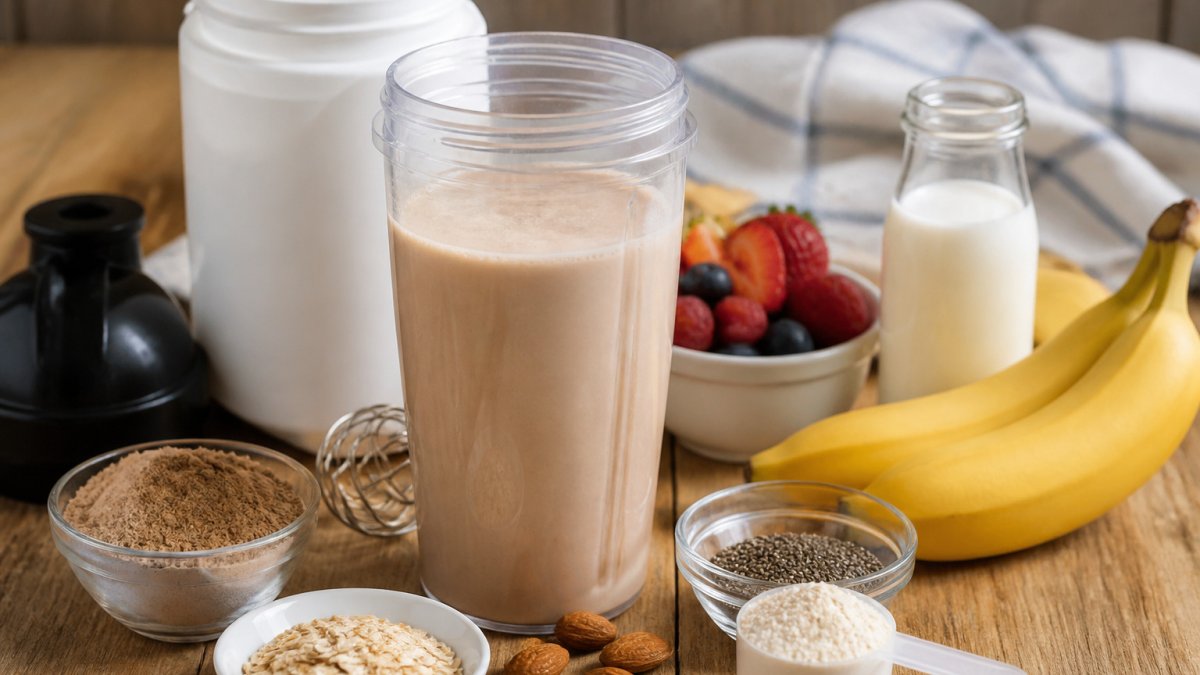
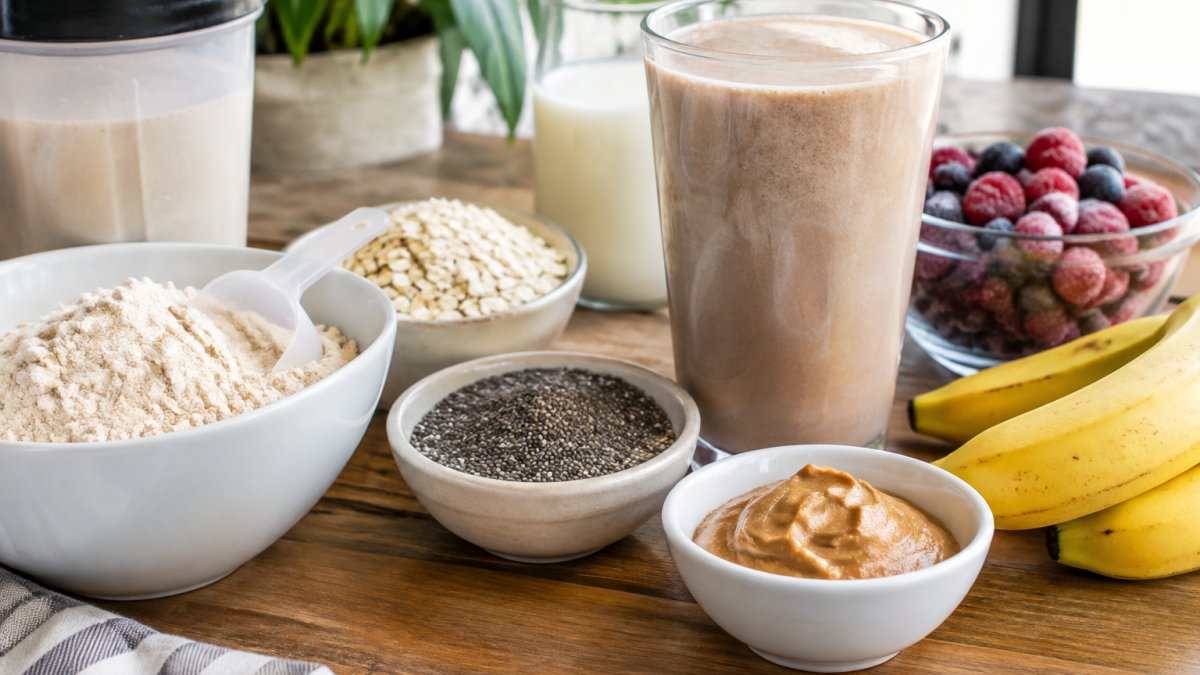
Some shakes use vanilla or cocoa flavoring; others include sweeteners or texture ingredients. Add-ins at home can also change the mix: banana, blueberries, blackberries, cinnamon, unsweetened cocoa, nut butter, or almond milk each brings its own flavor and texture. Water keeps the preparation simple, while coffee can add a coffee flavor. For a sweeter flavor without adding another ingredient such as fruit or cocoa, sugar-free flavour drops offer another way to adjust a shake.
What most guides miss is that “more ingredients” does not automatically mean “better.” Start with one add-in, blend, and taste before adding another. This makes it easier to identify which ingredient changed the flavor or shake consistency.
5. Add-Ins, Allergens, and Dietary Fit
The best add-ins depend on your preferences, the shake’s existing ingredients, and any foods you avoid. Whole-food additions such as fruit, flaxseed, or nut butter can change flavor and texture, while also changing the overall nutrition of the drink. Start with a small addition and check how it fits your needs.
For dietary fit, check for milk ingredients such as whey or casein, and look for soy, nuts, or other ingredients relevant to your food restrictions (the FDA). “Vegan protein” and “plant-based protein” are useful clues, but they are not substitutes for reading the full ingredient and allergen information. If you are unsure whether an ingredient is suitable for you, ask the product provider or a qualified professional.
For more context on ingredient choices and goals, read protein shake ingredients for weight management. That article can help you think through ingredient trade-offs without assuming one recipe suits everyone.
6. Ready-to-Drink Protein Shakes Versus Powder
Ready-to-drink protein shakes are prepared for convenience, while protein powder gives you more control over the liquid, mix, and add-ins. Neither format is automatically the better choice. Pick based on when you’ll use it, how much preparation you want, and whether you need to review a specific ingredient list.
Powder can be blended with water or another liquid, then adjusted with ingredients such as fruit or cinnamon. A ready-to-drink shake avoids the mixing step, but you still need to read its label for protein source, sweeteners, and allergens. The real difference between the formats comes down to convenience versus customization.
If pickup fits your routine, these steps for ordering protein shakes for pickup explain the process. At Vitality Nutrition LLC, free curbside pickup is available; delivery availability and courier fees for eligible TeaDash addresses are confirmed at Square checkout.
7. Choose a Protein Shake at Vitality Nutrition
Choose a protein shake by checking its protein source, ingredient list, flavor, and format against your preferences. That approach is more useful than choosing by flavor name alone. If you want to explore available options, Vitality Nutrition LLC offers protein shakes, and you can review the menu before placing an order.
Our practical checklist:
- Identify the protein source and any ingredients you avoid.
- Read the full ingredient list and nutrition label.
- Decide whether you want a ready-to-drink option or a shake with add-ins.
- Check the current menu for available choices.
- Choose free curbside pickup or enter your address at Square checkout to confirm TeaDash availability and courier fees.
For a local overview, see our guide to healthy protein shakes in Bristol. If ordering delivery, independent drivers fulfill TeaDash orders through Square, and tips go to the driver. We recommend checking the checkout details before placing an order, since availability and delivery fees are confirmed there.
Frequently Asked Questions
What ingredients should I look for in a protein shake?
For a shake from Vitality Nutrition, check the current menu or ask the shop about available product details.
What are the main protein sources in shakes?
Common protein sources include whey protein, which comes from milk, and casein, another milk protein. Soy protein is a plant-based option, while pea protein and proteins from sources such as pumpkin seed or hemp also appear in some products. Protein sources in shakes differ in origin and suitability, so check the ingredient list for the specific source and any allergens relevant to you.
How do I read a protein shake nutrition label?
Check the serving size first so you know what the listed nutrition information describes. Then review protein content, total fat, and the ingredient list. Ingredients are generally listed by weight, so the first items make up more of the product than later ones. Look for the named protein source and check for sweeteners, flavoring, additives, or allergens that matter to your diet.
What sweeteners are commonly used in protein shakes?
Protein shakes may use sugar or other sweeteners, and the specific choice varies by product. Flavorings such as vanilla or cocoa can also shape taste without identifying the sweetener. Read the ingredient list to find what a particular shake contains, especially if you are limiting or avoiding a certain ingredient. Do not assume two shakes with the same flavor use the same sweeteners.
Are protein shakes made with whey or plant-based protein?
They can be made with either. Whey protein and casein come from milk, while soy, pea, hemp, and pumpkin seed are examples of plant-based protein sources used in some products. Check the label to confirm the source rather than relying on the flavor or product name. If you have a food allergy or dietary restriction, review the full ingredient and allergen information before choosing.
What is the difference between ready-to-drink protein shakes and protein powder shakes?
Ready-to-drink protein shakes come prepared, while a protein powder shake is mixed before drinking, commonly with water or another liquid. Powder lets you choose the mixing liquid and may allow add-ins such as banana, berries, or nut butter. The ingredient list and nutrition information vary by product, so compare labels and serving sizes rather than assuming one format has a particular protein content.
Choosing a shake can feel confusing when product names reveal less than the ingredient list. Vitality Nutrition LLC offers protein shakes, free curbside pickup, and TeaDash delivery for eligible addresses, with availability confirmed at checkout. Get started with Vitality Nutrition LLC by checking the current menu and choosing the pickup or delivery option that fits your day.