 ultimate-guide
How to Judge Whether Loaded Teas Are High in Sugar
Last Updated: November 1, 2026
Quick Summary
Loaded teas can be high in sugar, depending on the recipe. Their sugar comes mainly from syrups, concentrates, and sweetened flavor mixes, so the only reliable way to judge a specific loaded tea is to check its nutrition panel for added sugars and total carbohydrates at the size you plan to order.
- Check added sugars, which show how much sweetening went into the recipe.
- Compare drinks only at the same serving size.
- A low-sugar drink can still be high in total carbohydrates.
- Sugar-free means no added sugar, not zero carbs or calories.
- Read the ingredient list for syrups, concentrates, and sweetened mixes.
Table of Contents
- What Loaded Tea Is and How It Is Made
- Loaded Tea Ingredients: What Goes Into the Cup
- Loaded Tea Nutrition Facts: Reading Calories, Sugar and Carbs
- Loaded Tea Calories and Carbs by Recipe and Serving Size
- Sugar-Free Claims, Sweeteners and What They Mean
- Loaded Tea and Blood Sugar: Why Individual Responses Vary
- Checking Nutrition Before You Order Your Next Loaded Tea
- Frequently Asked Questions
What Loaded Tea Is and How It Is Made
Loaded teas are iced teas that come with flavor shots, sweeteners, and sometimes added ingredients blended into the base. Loaded teas are built around the flavor a guest picks. That made-to-order approach is also why the sugar question matters: the final drink depends on what goes into it.
The base is typically a brewed or prepared tea, served cold. Flavor components are then added, and the result is finished according to the specific recipe. Two loaded teas with similar names can differ in sweetness, calories, and carbohydrates depending on the recipe.
For a reader trying to judge sugar content, the useful question is not "is loaded tea sweet?" but "what exactly went into this cup?" Asking for the recipe is the fastest way to answer it.
Loaded Tea Ingredients: What Goes Into the Cup
Most loaded teas combine a tea base, a flavor element, and a sweetening component. The flavor element may be a syrup, a fruit-based mix, or a concentrate, and each one carries its own sugar load. Some recipes also include herbal extracts or added vitamins, and these should be checked individually rather than assumed.
Caffeine is another ingredient to verify. The tea base contributes some, and certain add-ins may contribute more.
When you read an ingredient list, look for the main sugar sources: syrups, concentrates, and sweetened mixes. Those are where most of a drink's sugar and carbohydrate typically comes from.
Loaded Tea Nutrition Facts: Reading Calories, Sugar and Carbs
A nutrition panel for a loaded tea is only useful if you read the right numbers in the right order. For a full breakdown of caffeine and drink content, see caffeine content in loaded tea drinks. Start with the serving size, then total carbohydrates, then total sugars, then added sugars, and finally calories. Each one answers a different question, and reading them out of order is how people misjudge a drink.
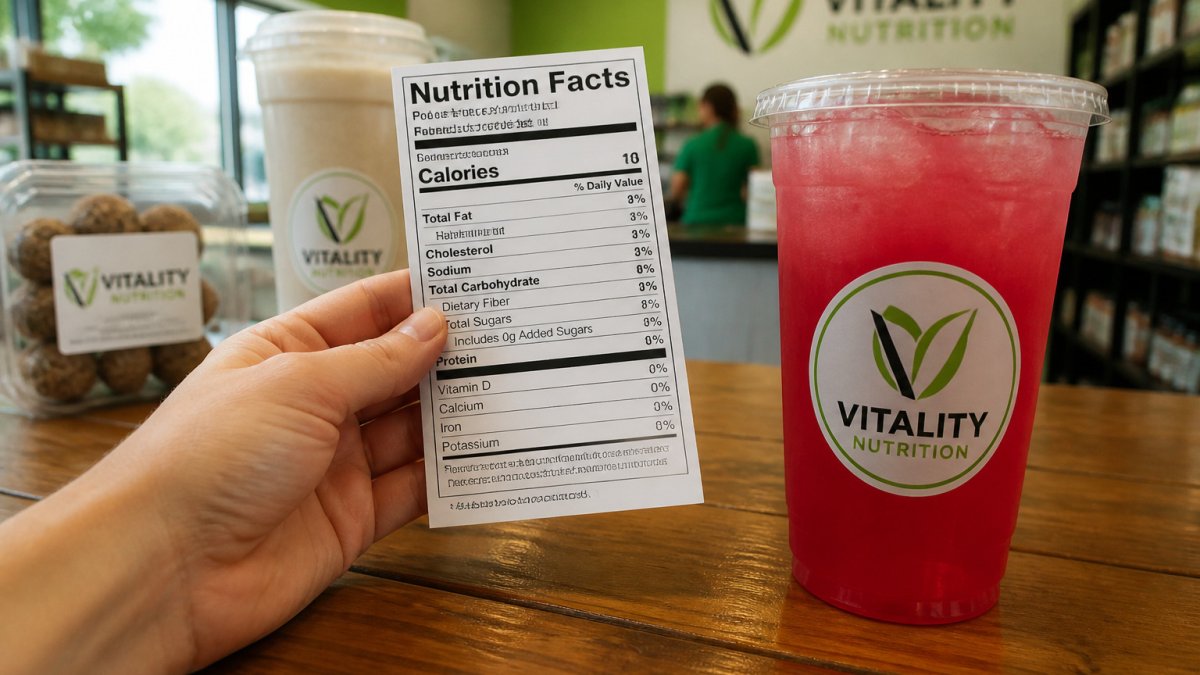
Serving size is the multiplier. Every figure on a label is tied to the serving size stated at the top. If a cup holds two servings and you drink the whole thing, you double every number. Before comparing two drinks, confirm both figures are stated for the same volume, a 16 oz cup and a 24 oz cup are not the same basis even when the flavor name matches.
Total carbohydrates vs. total sugars. Total carbohydrates include sugars plus starches and other carbohydrate sources. A drink can show modest sugars and still carry a higher carb count from flavor bases, powders, or thickeners. That is why a low-sugar drink is not automatically low-carb.
Added sugars vs. total sugars. Total sugars include sugars naturally present in ingredients; added sugars are those introduced during preparation (the FDA). A drink made with a fruit puree may show total sugars without a matching added-sugars line. The added-sugars figure is the one that tells you how much sweetening was done to the recipe.
Calories are a summary, not a verdict. A low-calorie drink can still contain sugar, and a higher-calorie drink can be low in sugar if its calories come from protein or fat. Read calories alongside sugars and carbs rather than in place of them.
The table below pulls together the key nutrition panel figures to check, and what each one tells you.
Label figure | What it tells you | Why it matters |
|---|---|---|
Serving size | The volume every figure is based on | Compare drinks only at the same size |
Total carbohydrates | Sugars plus starches and other carbs | A low-sugar drink can still be high in carbs |
Total sugars | Naturally present plus added sugars | Shows overall sugar content |
Added sugars | Sugar added during preparation | Best indicator of how sweetened the recipe is |
Calories | Total energy per serving | Read alongside sugars and carbs, not instead of them |
Loaded Tea Calories and Carbs by Recipe and Serving Size
Recipe is the biggest driver of calories and carbohydrates. For a breakfast-focused look at how loaded teas fit a morning routine, see loaded teas for breakfast. Two flavors served in the same size can have very different totals because one uses a sugar-heavy syrup and the other uses a lighter flavor base. Adding extra shots or toppings raises the numbers further.
Serving size works the same way. Moving up one cup size usually adds more liquid, flavor, and sweetener, so the calorie and carb count rises even if the recipe stays the same. Comparing drinks is most useful when you hold the size constant.
A practical habit is to choose a base recipe, note its numbers at your usual size, and then adjust one variable at a time, such as removing an extra flavor shot. This shows you exactly how each choice moves the totals.
Sugar-Free Claims, Sweeteners and What They Mean
"Sugar-free" on a loaded tea is a claim about added sugar, not a guarantee of zero carbohydrates or zero calories. To compare sweetened and sugar-free options, see best loaded tea flavors for beginners. Understanding what the claim covers, and what it leaves out, is the difference between reading a label and trusting a front-of-cup sticker.
What sugar-free typically means. A sugar-free label generally indicates no added sugar is used in the recipe. It does not automatically mean the drink is carbohydrate-free, because flavor bases, concentrates, and other ingredients can contribute carbohydrates. It also does not automatically mean calorie-free. Read the nutrition panel for the actual numbers rather than relying on the claim alone. Even when a label claims a product is sugar-free, monitoring your overall intake remains essential because subtle signs of hidden sugar can still impact your metabolic health.
Sweetener types you may see. Sweeteners used in place of sugar generally fall into a few groups:
- Non-nutritive sweeteners, sweeteners that add little or no calories. Examples include sucralose, aspartame, saccharin, and stevia-derived sweeteners. They sweeten without contributing meaningful sugar.
- Sugar alcohols, ingredients such as erythritol, xylitol, and maltitol. They contain fewer calories than sugar and are counted as carbohydrates, though not all of those carbohydrates are absorbed the same way.
- Natural sweeteners, options like monk fruit or stevia leaf extracts, which are often grouped with non-nutritive sweeteners on labels.
Each group behaves differently on a nutrition panel, and the label is where the difference shows up. A drink sweetened with a sugar alcohol may still list carbohydrates even though added sugars read zero.
Sweetness is not sugar content. A drink can taste very sweet while containing little or no sugar, and a lightly sweet drink can still carry sugar from a base ingredient. Taste is not a reliable proxy for the numbers.
How to verify a specific drink. Check the nutrition panel for added sugars, total carbohydrates, and calories at the size you choose. If a sugar-free claim matters to you, confirm it against the panel rather than the name of the drink.
The practical takeaway: a sugar-free loaded tea can be a reasonable choice if you are watching added sugar, but confirm the carbohydrate and calorie figures for the exact recipe and size you order before treating it as a zero-everything drink.
Loaded Tea and Blood Sugar: Why Individual Responses Vary
Blood sugar responses to sweet drinks vary from person to person. For practical ways to plan around an afternoon energy dip, read how to avoid a mid-day sugar crash at work. Factors such as body composition, activity level, what you ate beforehand, and overall health all influence how a drink affects you. A drink with the same sugar content can produce different responses in different people.
Because of this variation, general statements about a drink's effect on blood glucose should be treated with caution. If you monitor blood sugar or manage a condition that affects it, talk with your healthcare provider about how sweetened drinks fit into your plan. This article is not medical advice.
What you can control is the sugar load itself.
Checking Nutrition Before You Order Your Next Loaded Tea
Start by picking the flavor and size you want, then request its nutrition figures for that exact combination. Compare calories, total carbohydrates, and sugars side by side with another option at the same size. Confirm whether the sweetener is sugar, a sugar alcohol, or a non-nutritive sweetener.
Choose free curbside pickup or TeaDash delivery up to 10 miles for eligible addresses. Independent drivers fulfill TeaDash orders through Square; enter your address at checkout to confirm availability, delivery timing, and the delivery fee. Any delivery tip goes directly to your driver. For more about ordering options, read is tea delivery faster than pickup. Check current details on our website before you order.
Once you have the numbers and the logistics, you can decide with confidence. Visit Vitality Nutrition LLC to explore loaded teas, protein shakes, and protein balls, then order for pickup or delivery and choose the cup that fits your goals.
Frequently Asked Questions
Are loaded teas high in sugar?
It depends on the recipe, the flavor and the serving size. Some loaded teas are sweetened with added sugar, while others use sweeteners without sugar. The only reliable way to know is to check the nutrition information for the specific drink you are ordering. Compare total sugar, added sugar and total carbohydrates on the label, and ask the provider for the nutrition details of the exact recipe if they are not posted.
Do loaded teas contain sugar if they taste sweet?
Not necessarily. Sweetness can come from sugar, from non-nutritive sweeteners or from flavorings that taste sweet without adding much sugar. A drink can taste sweet and still list added sugar, and a drink labeled sugar-free can still contain carbohydrates from other ingredients. Taste alone cannot tell you which is which, so review the ingredient list and nutrition facts.
How can I find out how much sugar is in a loaded tea?
Start with the nutrition information for the exact recipe and serving size you plan to order. Check total sugar, added sugar and total carbohydrates. Confirm whether pumps, syrups or concentrates change the numbers, and note whether the serving size matches the cup you are buying. If the information is not available, ask the provider before ordering. Vitality Nutrition LLC's menu and nutrition details are best checked on its website.
Who should be cautious about loaded teas?
People who track sugar or carbohydrates closely, including those managing blood sugar, should review the nutrition details for each drink and consider their own targets. Caffeine sensitivity is another factor to consider. A healthcare professional can advise on what fits an individual's needs, and this article is not medical advice.