 ultimate-guide
Protein Shake Ingredients for Weight Management
Last Updated: November 3, 2026
Quick Summary
Protein shake ingredients for weight management come down to four building blocks: a quality protein powder, a fiber source, a fruit or vegetable, and a liquid that does not add sugar. Measure the calorie-dense ingredients like nut butter and oats, and keep added sugar low. Get those right and a shake can work as a satisfying snack or light meal instead of a dessert in a cup.
- Build shakes from one scoop of protein powder, one tablespoon of chia or ground flaxseed, and one-half to one cup of frozen fruit.
- Use one tablespoon of peanut butter or nut butter and unsweetened almond milk or water as the base.
- Choose a powder with protein as the first ingredient, minimal added sugar, and a short ingredient list.
- Place the shake where it replaces a less nutritious snack rather than stacking it on top of regular meals.
- For dairy-free swaps, use plant protein and unsweetened almond milk in place of whey, whole milk, and Greek yogurt.
Table of Contents
- Building a Better Protein Shake for Weight Management
- Protein Shake Ingredients That Support Weight Management
- How to Choose a Protein Powder for Weight Management
- When to Drink Protein Shakes for Weight Management
- Protein Shake Portion Control Tips
- Dietary Restrictions and Easy Substitutions
- Ordering Protein Shakes for Your Office or Solo Pickup
- Frequently Asked Questions
Building a Better Protein Shake for Weight Management
Protein shake ingredients for weight management come down to four building blocks: a quality protein powder, a fiber source, a fruit or vegetable, and a liquid that does not add sugar. For a look at the shop's actual shake options and ingredients, see our Healthy Protein Shakes in Bristol: A Local Guide. Get those right and a shake can work as a satisfying snack or light meal instead of a dessert in a cup. This guide walks through each block, then shows how to choose a powder, time your shake, control portions, and adapt recipes to dietary restrictions.
Most shake advice online stops at the recipe. The harder question is what actually goes in the cup and why. Below, we break down the ingredients that support weight management, the ones that quietly work against it, and how to build a shake you will actually keep drinking.
Protein Shake Ingredients That Support Weight Management
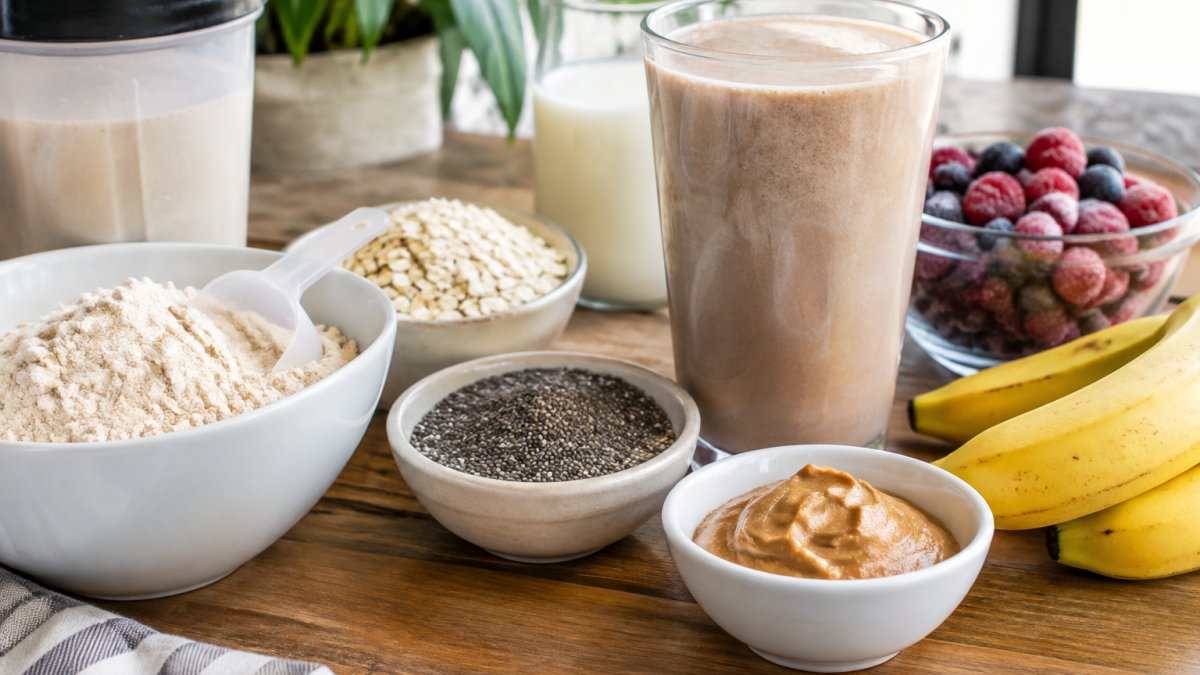
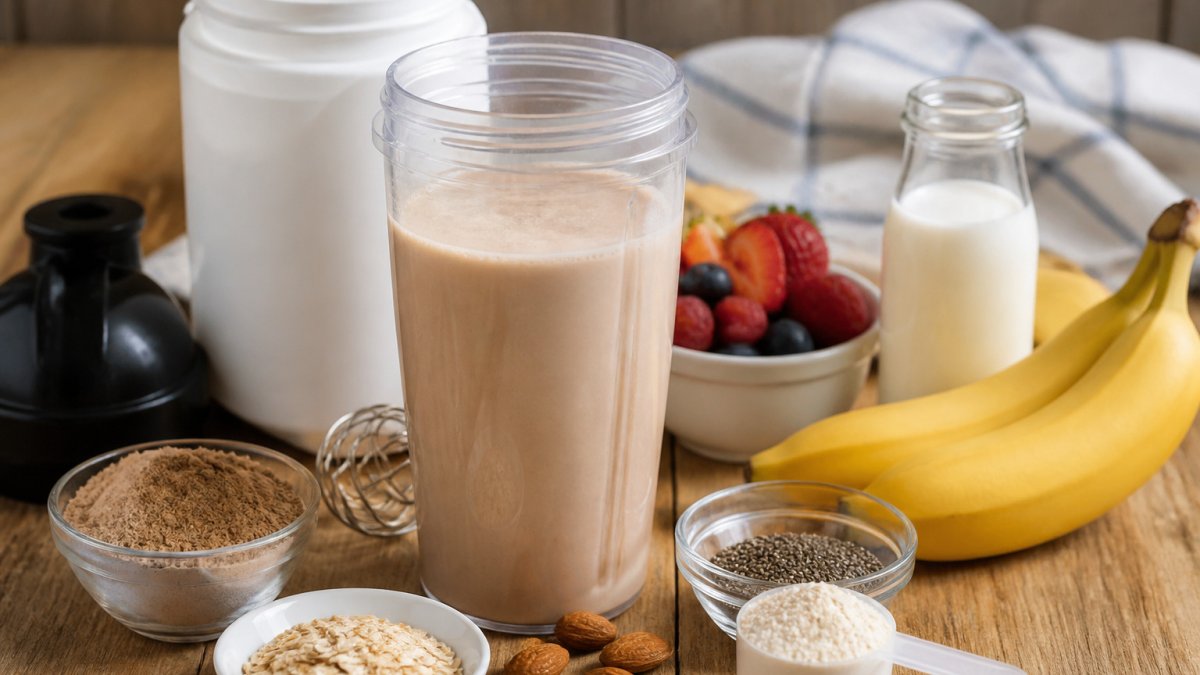
Four ingredient groups do the heavy lifting in a weight-management shake, and each one earns its place for a specific reason. Protein powder supplies the bulk of the protein in most shakes. Fiber sources like chia, flaxseed, and oats add volume and thickness. Fruit and vegetables add flavor, nutrients, and chewable bulk without many calories. Fats from seeds, nut butter, or yogurt make the shake creamier.
The rest is liquid and flavor: unsweetened almond milk, whole milk, coffee, cocoa powder, vanilla, or a little honey. Keep added sugar low and the ingredient list short for a simpler shake.
What separates a weight-management shake from a dessert in a cup is quantity, not just the ingredient list. A common pattern is to treat every add-in as free because it is "healthy," then end up with a shake that carries more calories than the snack it was meant to replace.
Protein Powder: Whey and Plant-Based Options
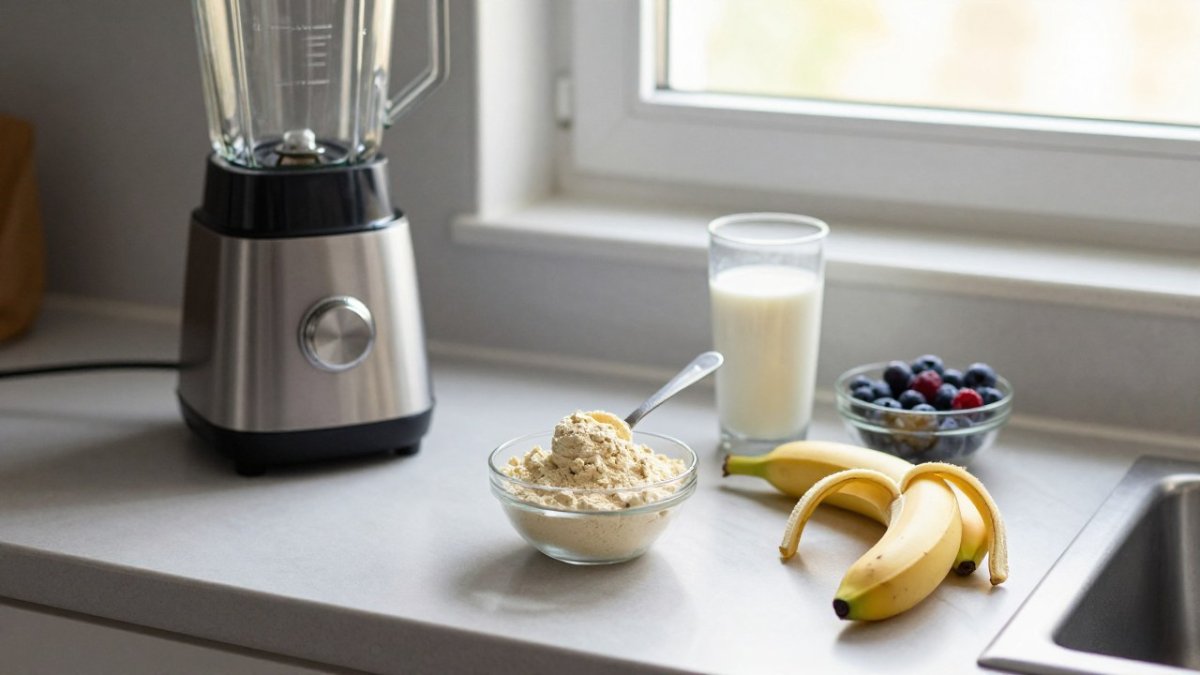
Whey protein is a common choice and many people find it mixes smoothly. Plant protein, usually a pea and rice blend, suits anyone avoiding dairy and works well in fruit-forward shakes. Vanilla and chocolate protein powders are the most versatile for pairing with banana, peanut butter, and berries.
What matters more than the type is the label. Look for a powder with protein as the first ingredient and minimal added sugar. Check the label for the protein per scoop, since the amount varies by brand. A common mistake is buying a flavored powder that already contains sweetener, then adding honey and fruit on top. That turns a weight-management shake into a dessert.
Front-of-package labels are marketing; the nutrition panel is the place to confirm protein and added sugar per serving.
Fiber, Fruit, and Healthy Fats
Fiber is the ingredient most home shakes are missing. Chia seeds, ground flaxseed, and rolled oats each add thickness and support fullness. A practical starting amount is one tablespoon of chia or ground flaxseed stirred in before blending, or two to three tablespoons of rolled oats. Frozen banana and frozen berries add natural sweetness and a creamy texture; a common starting range is one-half to one cup of frozen fruit per shake.
Healthy fats come from peanut butter, plain Greek yogurt, cottage cheese, or a few cacao nibs. These make the shake more filling. If you are pairing a shake with a snack, our guide on whether protein balls are a smart snack choice covers how they fit into a weight-management plan.
A Starting Formula You Can Adjust
Rather than guessing, build the shake from a repeatable base and adjust one variable at a time. A reasonable starting formula is one scoop of protein powder, one tablespoon of chia or ground flaxseed, one-half to one cup of frozen fruit, one tablespoon of nut butter or a half-cup of plain Greek yogurt, and eight to twelve ounces of unsweetened almond milk or water. Measuring each ingredient makes the shake easier to repeat than a free-poured recipe.
Adjust from there based on your own preferences. If the shake feels too light, add fiber or protein before adding fat or sweetener. If it feels too heavy, reduce the nut butter first. The goal is a shake you can make the same way most days, because consistency matters more than any single ingredient.
How to Choose a Protein Powder for Weight Management
Choose a protein powder with a clear protein amount per scoop, minimal added sugar, and a short ingredient list. Whey and plant-based options both work; pick the one your stomach tolerates and your budget allows.
Read the nutrition panel before the front label. Front-of-package claims like "high protein" or "lean" are marketing language. Check the serving size, the grams of protein, the grams of added sugar, and whether the powder is a blend with fillers. A single-ingredient whey or plant protein is easier to control than a flavored meal-replacement powder that already contains sweetener and thickeners.
If you are unsure how a powder will taste or mix, ask before you commit to a tub. Bring your questions about what is in the cup, especially if you are ordering for a group.
When to Drink Protein Shakes for Weight Management
A protein shake can work as a snack between meals or as a post-workout drink, not as a replacement for every meal. To understand the benefits of a post-workout shake before deciding when to drink, read our guide on protein shake benefits for post-workout recovery. Timing matters less than total daily protein and overall diet quality. A shake in the mid-afternoon can be a convenient alternative to a vending machine snack.
Drinking a shake right before bed is a common habit, but it adds calories at a time when many people are least active. If your goal is weight management, place the shake where it replaces a less nutritious snack rather than stacking on top of your regular meals.
Protein Shake Portion Control Tips
Portion control is where most shakes go wrong. A "shake" can easily become a 600-calorie meal if you free-pour peanut butter, honey, and handfuls of oats. Measure the calorie-dense ingredients and eyeball the low-calorie ones.
- Measure protein powder with the scoop, not a heaping tablespoon
- Use 1 tablespoon of peanut butter or nut butter, not a generous swirl
- Stick to 1/2 to 1 cup of frozen fruit per shake
- Use unsweetened almond milk or water as the base, not juice or sweetened milk
- Add chia or flaxseed by the tablespoon, not the handful
- Treat honey and sweeteners as optional, and measure if you use them
A simple rule: the protein and fiber go in freely, the fats and sweets get measured. That keeps the shake nutrient-dense without turning it into a calorie bomb.
Dietary Restrictions and Easy Substitutions
Most shake recipes adapt easily to dietary restrictions, but the swap you choose changes the protein, texture, and sugar in the cup.
Restriction | Swap In | Swap Out |
|---|---|---|
Dairy-free | Plant protein, unsweetened almond milk | Whey, whole milk, Greek yogurt |
Vegan | Pea and rice protein blend, silken tofu | Whey, cottage cheese, honey |
Nut-free | Sunflower seed butter, oats | Peanut butter, almond milk |
Low-sugar | Unsweetened cocoa, cinnamon, vanilla | Honey, flavored powders, juice |
Gluten-free | Certified gluten-free oats | Regular oats, some flavored powders |
Silken tofu is an underused swap: it adds creaminess and protein without dairy, and a quarter to a half cup blended into a shake gives a thick texture similar to yogurt.
A few trade-offs are worth knowing before you swap.
Watch out: swapping whey for plant protein can lower the protein per scoop depending on the brand, so recheck the nutrition panel after any protein swap rather than assuming the shake still hits your target.
For weight management specifically, the swap that matters most is the liquid and the sweetener, not the protein type.
Ordering Protein Shakes for Your Office or Solo Pickup
Ordering shakes for a group is easier with a little planning. For a solo shake, curbside pickup gets you in and out quickly. For an office order of 15 to 20 people, collect flavor choices and any dietary restrictions before you order so the whole group gets what they want. See our steps on how to order group office drinks.
TeaDash delivery is available up to 10 miles for eligible addresses and is fulfilled by independent drivers through Square. Enter your address at checkout to confirm availability and see the delivery fee. Free curbside pickup is also available.
Frequently Asked Questions
What are the best protein shake ingredients for weight management?
A balanced shake starts with a quality protein powder, then adds fiber and healthy fats for staying power. Try unsweetened almond milk or plain Greek yogurt as a base, add frozen berries or half a banana, and stir in chia seeds or ground flaxseed. These protein shake ingredients keep added sugar low. Keep portions measured so the shake fits your overall eating plan.
How do I choose a protein powder for weight management?
Look for a powder with a short ingredient list and minimal added sugar. Check the serving size and protein amount per scoop so you can control portions. Whey and plant-based options both work; pick one that suits your digestion and taste. Avoid powders with long lists of fillers or sweeteners you do not recognize. If you have dietary restrictions, confirm the label before buying.
When is the best time to drink a protein shake for weight management?
Timing depends on your routine. A shake can work as a quick breakfast, a between-meals snack, or a post-workout option. Some people choose a mid-morning or mid-afternoon shake as a snack between meals. Avoid drinking shakes mindlessly alongside full meals, since that adds calories without replacing anything. Choose a time when the shake replaces a less balanced choice.
Can protein shakes be part of a balanced diet?
Yes, when they include quality ingredients and fit your overall intake. A shake made with protein powder, unsweetened milk, fruit, and seeds includes protein and fiber from those ingredients. Treat it as one part of your day, not a replacement for all whole foods. Pair shakes with vegetables, whole grains, and other protein sources. Portion control matters as much as the ingredient list.
How does Vitality Nutrition handle delivery and pickup for shakes?
Vitality Nutrition offers free curbside pickup and TeaDash delivery up to 10 miles for eligible addresses. Delivery is fulfilled by independent drivers through Square. Enter your address at Square checkout to confirm availability and see the delivery fee. Any delivery tip goes directly to your driver.
What should I look for in a high-quality protein shake?
Start with the protein source and amount per serving, then scan for added sugar and unfamiliar ingredients. A shake with protein, some fiber, and limited added sugar is a practical choice. Ask for nutrition information if you are ordering for a group so everyone can decide. Ask the business about ingredient details before ordering. Read labels and compare serving sizes rather than marketing claims.
Explore the protein shake flavors on Vitality Nutrition’s current menu, and ask the shop about ingredients before ordering. Choose free curbside pickup or TeaDash delivery up to 10 miles for eligible addresses. Independent drivers fulfill delivery orders through Square; confirm availability and the delivery fee at checkout.